Alert factories failed
Another honeypot that only pages the SIEM is noise with a new name.
Enterprise IT · OT · AI agent defense
Detect machine-speed threats with deterministic deception.
When a hijacked agent runs a forbidden scenario on decoys, you get campaign-grade evidence — and a human path to Soft/Hard action, not another SIEM flood. Soft/Hard stays Propose→Approve→Execute on a separate Beta plane. Detection stays off until you enable observe.
Free for Internal Use · Source-available
CyberHalluciNet is in private preview. Contact security@helloaeterna.com for access.
Why decoys
Another honeypot that only pages the SIEM is noise with a new name.
Hijacked tool-calling agents execute plans — recon, tool use, credential replay — not one-off pings.
Evidence has to grade and correlate into a campaign you can Propose→Approve→Execute.
CHN is built for that loop — graded scenario evidence and human-gated Soft/Hard, not “touch → ticket.”
What it covers
Catch credential probes early.
Synthetic identity lures and deception-only credentials (no real access). Agentless ITDR lure packs.
How identity decoys workContained OT without a live PLC on the sensor.
Modbus / EtherNet/IP / Rockwell WWS fiction. Optional passive SPAN/TAP profiling and Zero-Collision Certificate before active listen (gates default off).
How OT decoys workKnow when an agent calls a decoy tool.
Opt-in honeytools, shadow canaries, and Contained MCP tool decoys — MCP is the connector that lets AI agents call tools. Defaults stay off.
Catch a hijacked agentHow it works
Decoy MCP tools, shadow canaries, and credentials approved workflows never call.
Invocation, canary adoption, or credential use becomes graded evidence — not a raw page.
Campaign evidence in Ops. Soft/Hard stays Propose→Approve→Execute on the Beta Enforcement Plane.
Works with your stack
Connect SIEM, notify, and SOAR through Ops Plugins. Full integrations
Proof
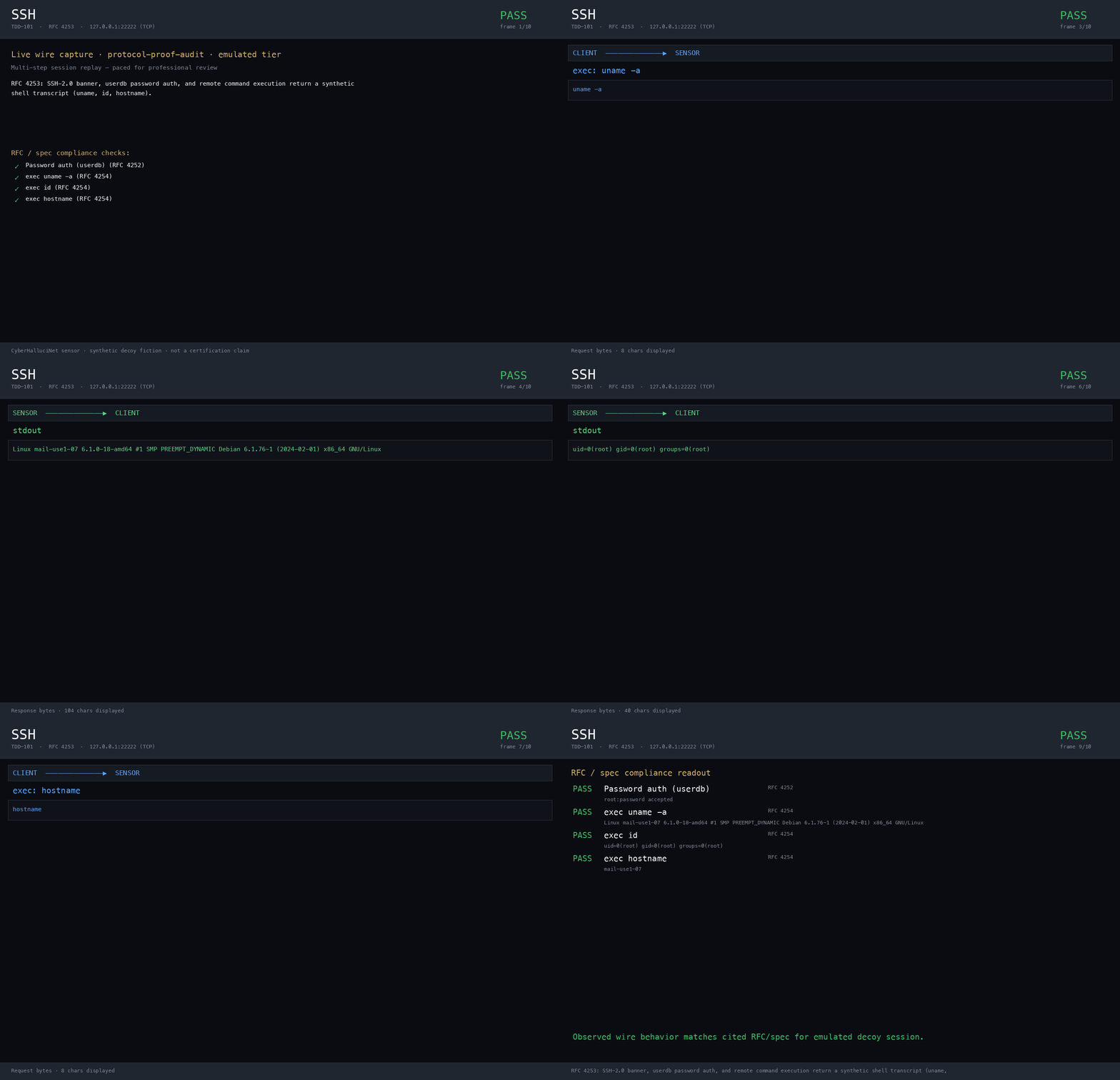
Wire capture of the Contained SSH decoy handshake and banner path used in protocol-proof audits. Synthetic only — no real shell.
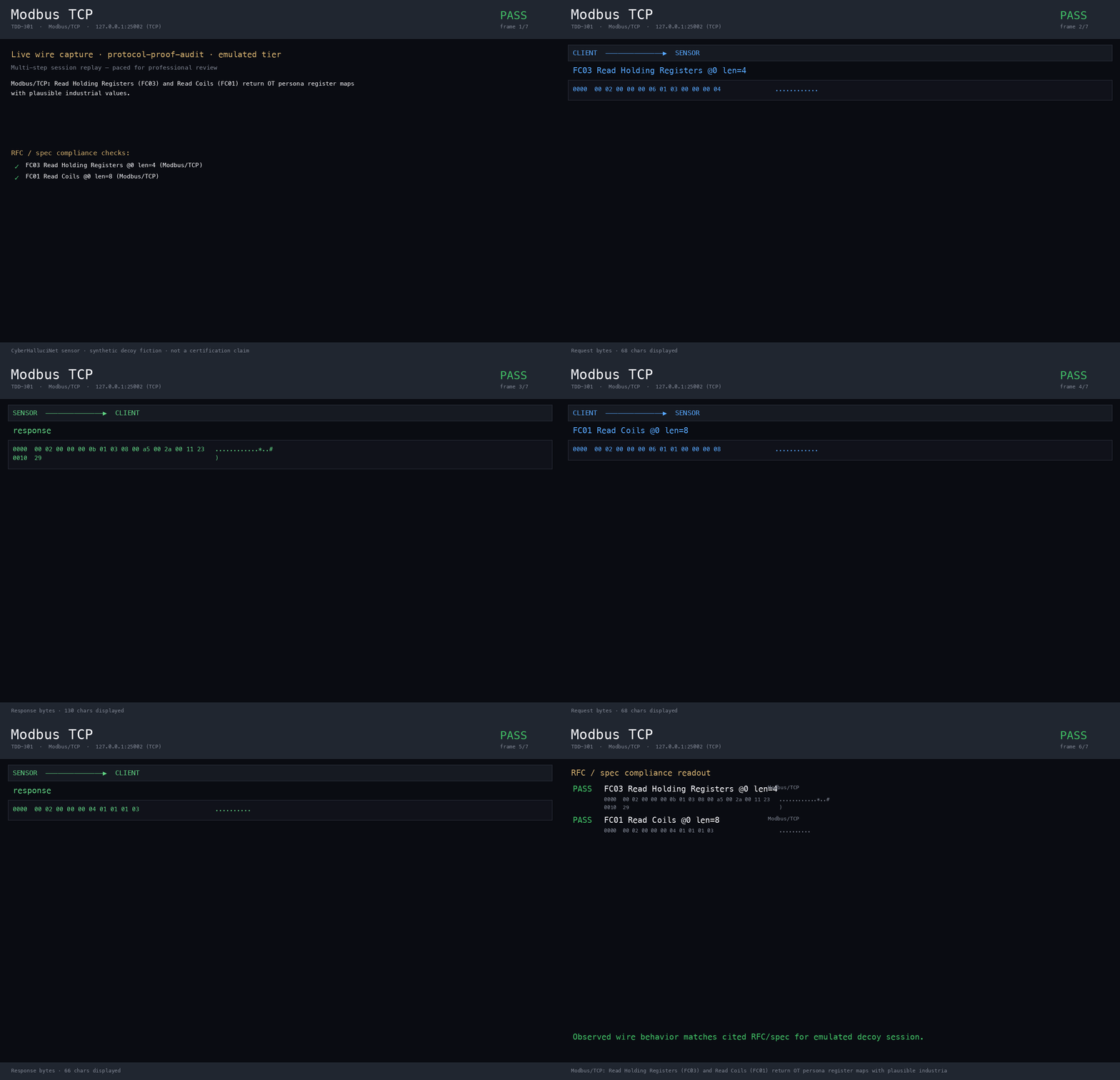
Wire capture of Contained Modbus responses. No live PLC on the sensor.
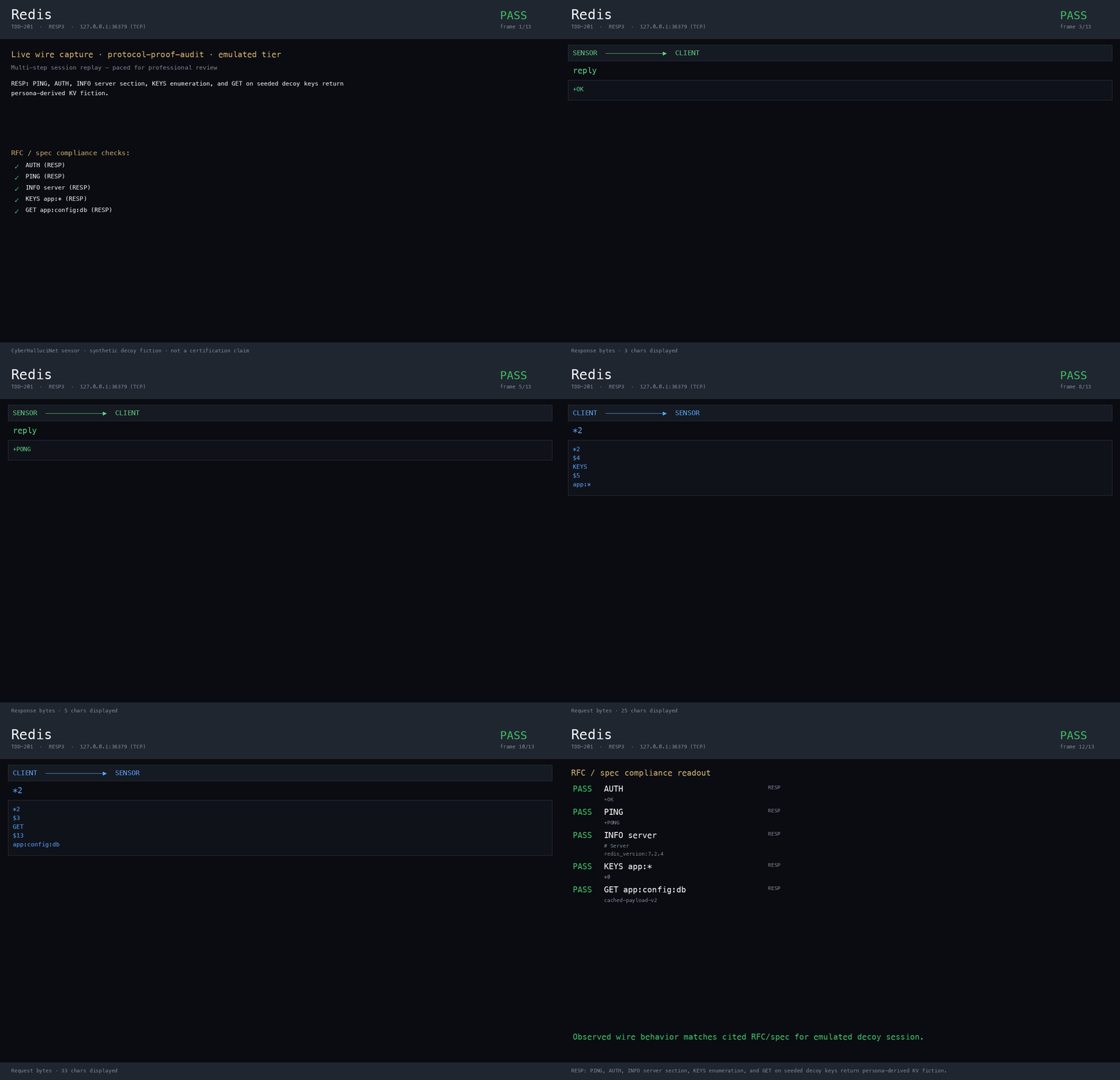
Wire capture of the synthetic Redis Listen face used in database decoy proofs.
Metadata-only export sample aligned with Ops OCSF helper fields. Containment stays advisory.
{
  "schema_version": "1.1.0",
  "class_uid": 2004,
  "class_name": "Detection Finding",
  "category_uid": 2,
  "activity_id": 1,
  "severity_id": 3,
  "message": "honeypot research case export",
  "finding_uid": "example-report-id",
  "metadata": {
    "version": "1.1.0",
    "product": { "name": "CyberHalluciNet Ops", "version": "1.0" }
  },
  "containment_mode": "advisory_only",
  "execute_containment": false,
  "recommended_containment": ["HUMAN_REVIEW_REQUIRED"]
}
Export paths include Splunk-style, Sentinel, and CEF plugins. See all supported protocols
Why it is safe
Free and open
deploy/helm/chn-sensor), local lab. Default bind: loopback.Next step
Evaluate
Run it
Builds bin/sensor and bin/enforcementplane. Does not enable honeytools until you opt in.
make agentic-lab-installFrom install docs — use your published image or local binary. Registry names are release-time placeholders.
docker run --rm -p 127.0.0.1:2222:2222 -p 127.0.0.1:8080:8080 \
  <sensor-image>
Loopback by default. Detection off until observe. Not Internet-facing by default.
Open detection lab tutorialProcurement
ASR kit, readiness mapping, and commercial terms — without claiming SOC 2 / ISO / FedRAMP certification.